
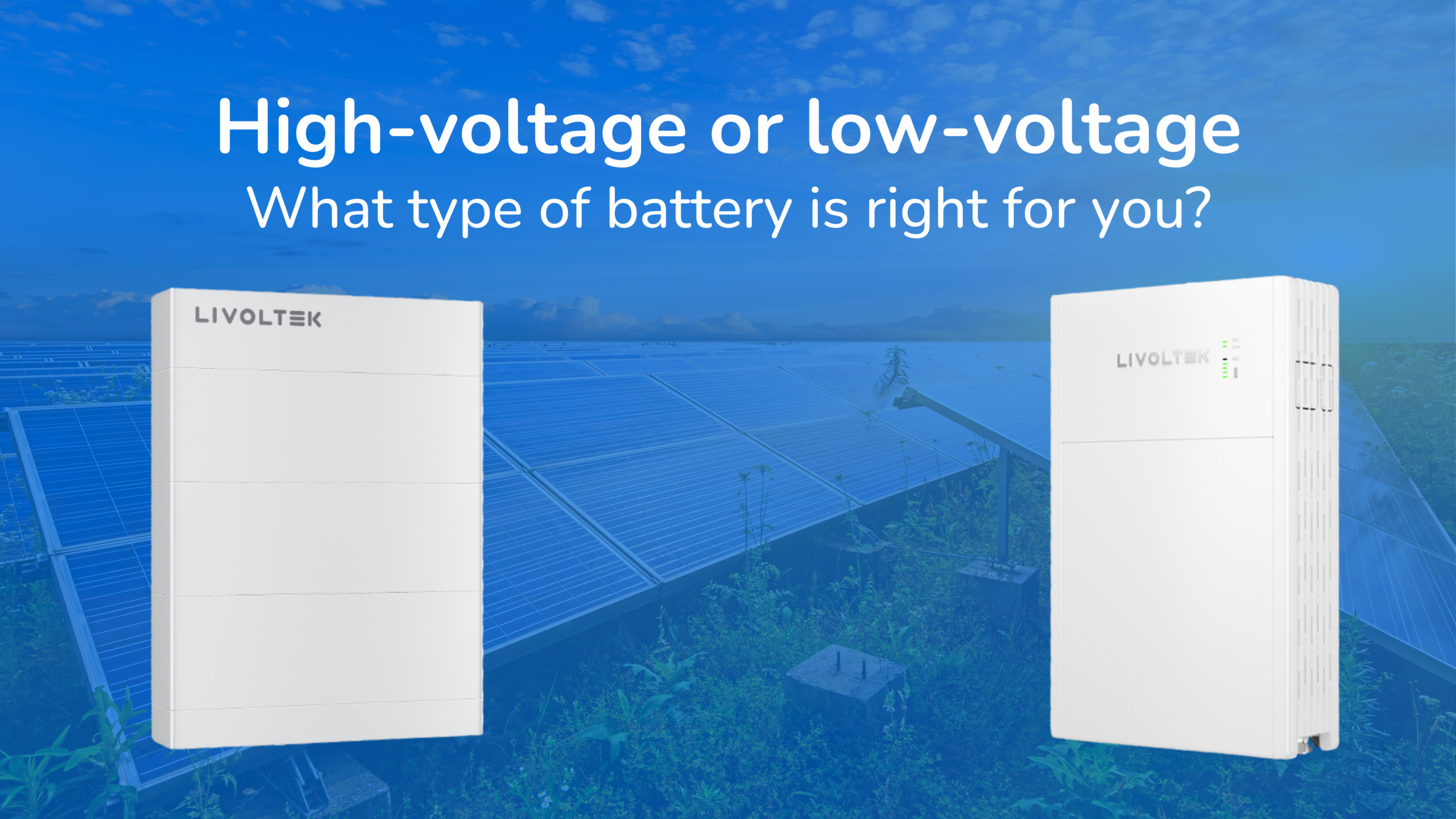
High-voltage or low-voltage battery – What type of battery is right for you?
When you start thinking about how to choose a storage battery, you come across two terms that sound technical and intimidating: “high-voltage” and “low-voltage.” The installer throws one or the other at you, you nod as if you understand, and you go home feeling like you’ve missed something important.
The difference is simpler than it seems, and you don’t necessarily have to be an engineer to understand it. For example, Livoltek has two battery families: BLF (low-voltage) and BHF (high-voltage). And in this article, we’ll explain in simple terms what sets them apart and how to figure out which one is right for you.
What “voltage” actually means in a battery
Without getting into physics, let’s start with an analogy that clarifies everything.
Think of energy as water flowing through a pipe. You can transport the same amount of water in two ways: through a thick pipe at low pressure (low-voltage) or through a thin pipe at high pressure (high-voltage). Both deliver the water. But at high flow rates, high pressure is more efficient because you lose less energy along the way.
It’s the same with batteries. A low-voltage system operates at a low voltage (at Livoltek, 51.2V). A high-voltage system operates at much higher voltages (at Livoltek, from 200V to over 600V, depending on capacity). Both store energy. The difference lies in how they do it and at what scale they perform best.
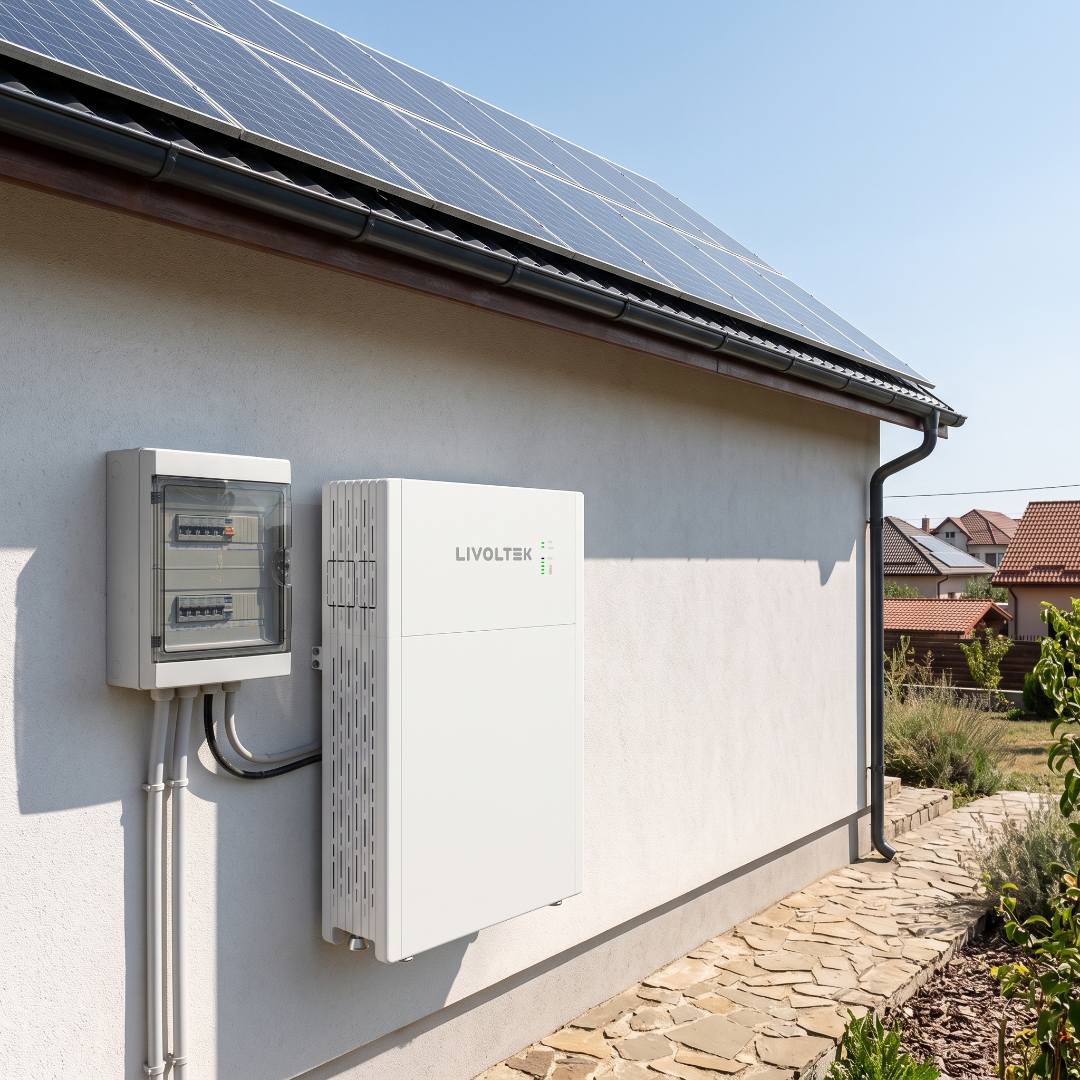
Livoltek BLF Series Low-Voltage Batteries
The BLF Series is the “workhorse” of the lineup—the practical solution for most households. It’s built from 5.12 kWh modules using LiFePO4 technology (the safest chemistry on the market), which can be stacked on top of one another. You start with one module and add another when you need more capacity. Each module withstands over 6,000 charge cycles, which translates to over 16 years of daily use.
Its main advantages:
· Affordable price. BLF batteries cost about the same as traditional lead-acid batteries, but with all the advantages of lithium (much longer lifespan, safety, superior depth of discharge). It’s the best price-to-performance ratio for getting started with battery storage.
· Wide compatibility. BLF batteries work with virtually any hybrid inverter on the market that supports lithium batteries, not just Livoltek inverters. This gives you great flexibility when choosing or keeping your inverter.
· Flexible installation. Compact design, wall- or floor-mountable, suitable for garages, utility rooms, or small spaces. The IP65-rated version can even be installed outdoors.
Who it’s for: small and medium-sized households, typical energy consumption, solar panel systems up to moderate power ratings, anyone looking to get into energy storage at a reasonable cost, or those adding a battery to an existing inverter from another brand.
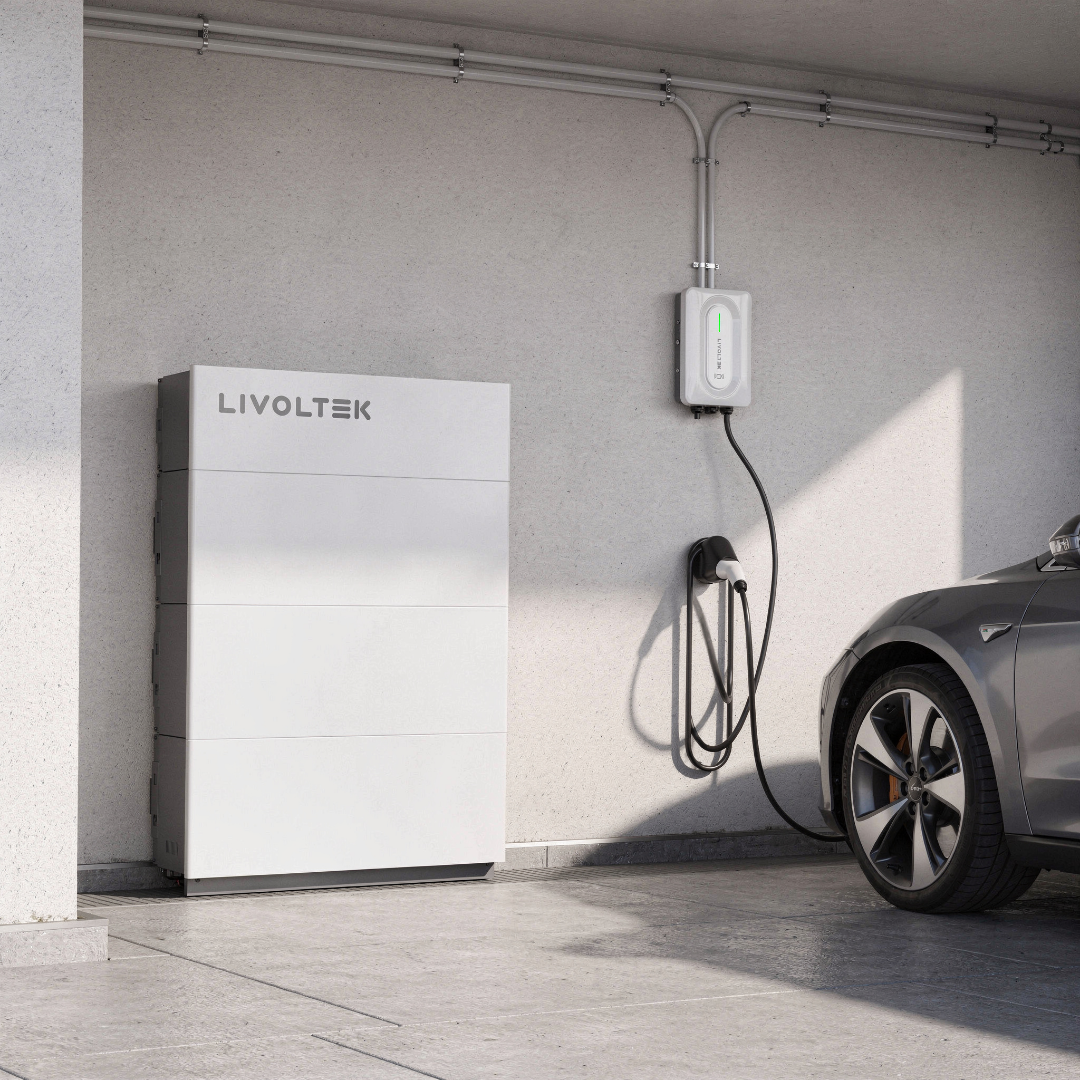
Livoltek BHF and BHF-G Series High-Voltage Batteries
The BHF Series is designed for when the stakes are higher—that is, when you have higher energy consumption, large-scale systems, and perhaps even plans for expansion.
How it’s built: still based on LiFePO4, still modular and stackable, but operating at high voltage (from 204.8V in the base system up to 614.4V in the 30 kWh configuration). The residential BHF series covers up to 30 kWh, with a 90% depth of discharge (you use 9 out of every 10 kWh) and IP65 protection for indoor or outdoor installation. For commercial use, the BHF-G series ranges from 15 to 60 kWh, suitable for stores, hotels, and small factories.
Its main advantages:
· Higher efficiency at high power levels. Here, the pressure analogy comes into play: at high power consumption, high voltage means lower losses in the cable and during conversion. The system operates more efficiently exactly where it matters most—when you’re drawing a lot of power simultaneously.
· Ideal for high power consumption. If you have a heat pump, an electric car, or several large appliances that turn on at the same time, a high-voltage system handles these peaks better.
· Scalability for growth. If you know your needs will grow—you’re getting an electric car, switching your home to all-electric, or expanding—a high-voltage system is built to grow with you.
Who it’s right for: large homes with high energy consumption, all-electric households (heat pump, electric car), high-power solar systems, small businesses and commercial spaces, or anyone planning to significantly expand their system in the future.
How to choose, in practice: 3 simple questions
You don’t have to endlessly compare specifications and get bogged down in the process. All you need to do is answer three questions, and you’ll have your final answer.
Question 1: How high is your energy consumption?
If you have typical household power usage (lighting, standard appliances, perhaps an air conditioner), the low-voltage BLF is sufficient and more economical. If you have high-power loads that draw a lot of power simultaneously (heat pump, electric car, multiple industrial devices), the high-voltage BHF works more efficiently.
Question 2: What is your inverter’s power rating, and what battery does it support?
Some hybrid inverters support only low-voltage, others only high-voltage, and some support both. This is the first technical check: the battery must be compatible with the inverter. A certified partner can immediately tell you what your system supports.
Question 3: How much do you plan to expand?
If you want a simple, quick solution right now for your current needs, then go with low-voltage. If you know you’ll be expanding (electric car, all-electric home, higher capacity), then high-voltage opens up more efficient growth opportunities for you in the long term.
Summary: There is no “better” option—only “the right” one
As with many technical decisions, one isn’t superior to the other. On the contrary, they’re designed for different situations.
· Low-voltage BLF is the smart choice for most households: affordable, flexible, compatible with almost any inverter, perfect for everyday use and for getting started with energy storage without a major investment.
· High-voltage BHF is the choice for high consumption and ambitious future plans: more efficient at high power levels, ideal for all-electric homes, large systems, and anyone planning to expand.
Both use the same safe LiFePO4 chemistry, both are modular and scalable, both last for over 6,000 cycles, and both come with Hexing’s warranty and local support from the Timișoara factory.
The easiest way to make the right choice is to have a brief conversation with a certified installer, who will review your energy consumption, your inverter, and your plans, and tell you exactly what’s right for you. You can find them at https://hexing.ro/distribution-network/ , and the full range of batteries at https://hexing.ro/our-products/ .
The right battery isn’t the most expensive or the largest one. It’s the one that’s perfectly suited to your home, your energy consumption, and your plans.