
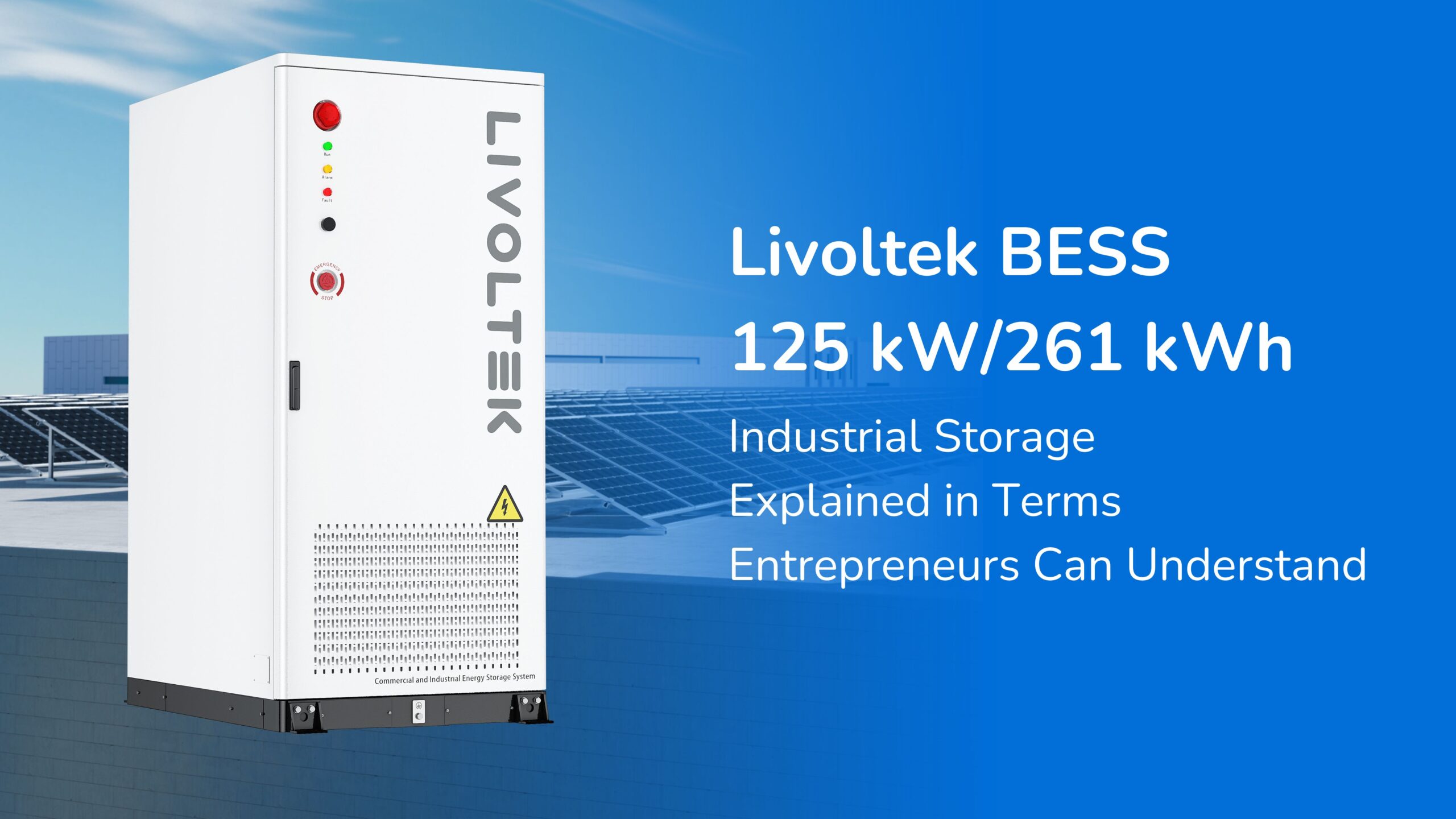
Livoltek BESS 125 kW/261 kWh. Industrial Energy Storage Explained for Entrepreneurs
If you’ve landed here, you’re probably tired of reading data sheets filled with terms like “1P52S 166.4V 314Ah” or “THDi <3%.” Those are important for engineers. For you, as a business owner, what matters is something else: how much it costs, what it actually does, and when you’ll see a return on your investment.
The BESS-125kW/261kWh is one of the products Livoltek is positioning for the commercial and industrial sectors. Let us explain what that means in business terms, without the technical jargon.
What exactly does “BESS” stand for?
BESS stands for Battery Energy Storage System. The difference between a BESS and a residential battery is like the difference between a delivery van and a semi-truck.
A residential battery holds a few kWh, powers a home, and costs thousands of lei. An industrial BESS holds hundreds of kWh, powers a factory or a supermarket, costs tens of thousands of euros, and is designed to operate 24/7, year after year, under harsh conditions.
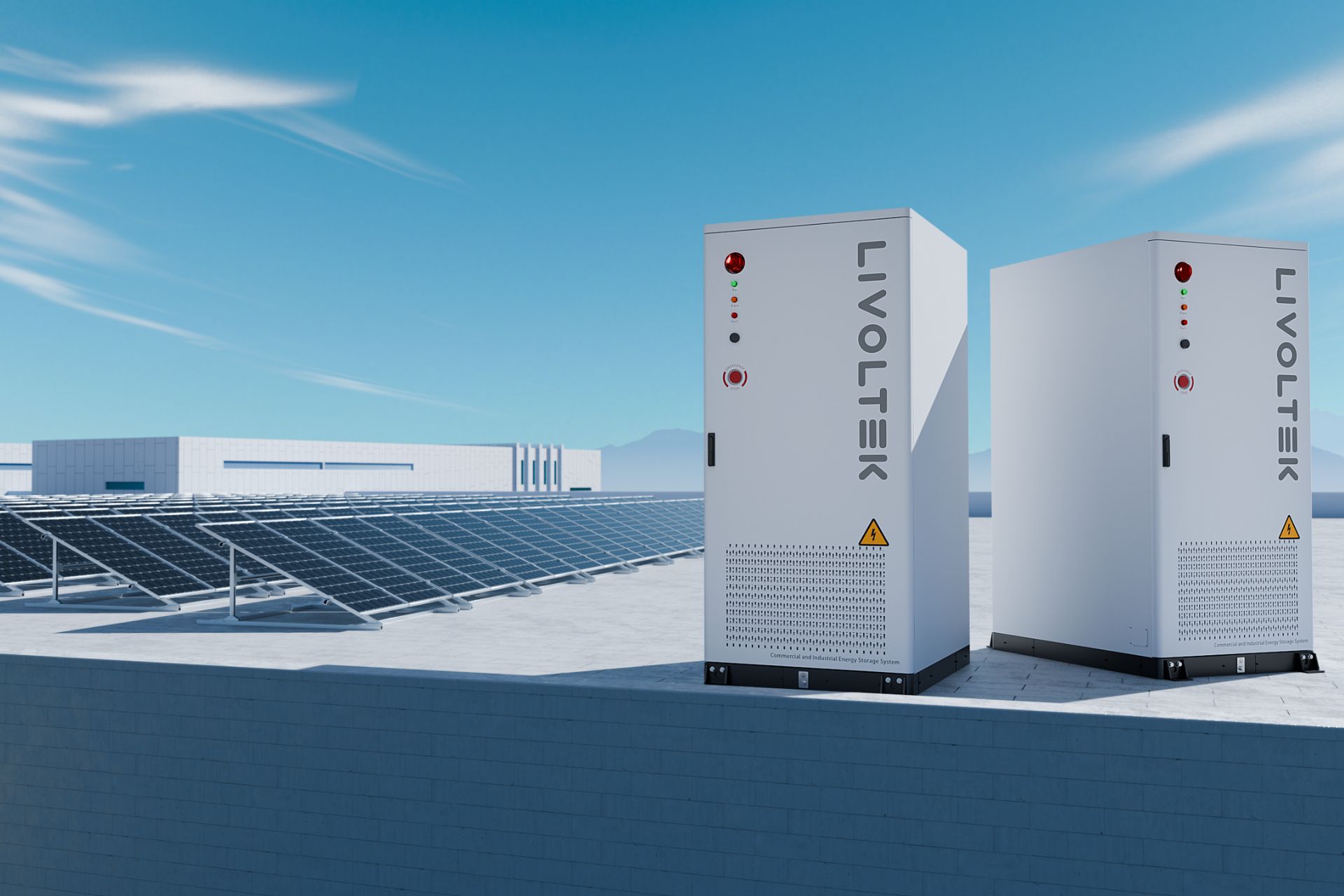
The Livoltek 125 kW/261 kWh BESS is a cabinet that fits on 1.35 square meters of floor space, meaning it takes up less room than an industrial refrigerator. Inside, it contains 5 LiFePO4 battery modules (lithium-iron-phosphate, the safest on the market), a power converter (PCS – Power Conversion System), a liquid cooling system, and an electronic control unit that manages everything (BMS – Battery Management System).
All you have to do is connect it to the building’s electrical grid, or to a photovoltaic system if available, and it starts working for you.
How do we translate specifications into business decisions?
- “All-in-one design” means you don’t have to buy five separate components from five different suppliers, integrate them yourself, or worry about compatibility. You buy a single product that’s already configured and factory-tested. Installation takes days, not weeks. And throughout the entire implementation process, you have a single point of contact for warranty and service.
- “125 kW rated power” means how much power it can deliver simultaneously. For context: an average industrial compressor consumes 15–30 kW, a bakery oven 20–40 kW, a supermarket cold storage room 15–25 kW, and a hotel’s air conditioning system 30–60 kW. With 125 kW, the BESS can simultaneously power all the critical equipment of an average business without any issues.
- “261 kWh total capacity” refers to how much energy it can store. In terms of runtime: if your business consumes an average of 30 kW, the BESS provides approximately 7–8 hours of full runtime. If you consume 50 kW, you have about 4–5 hours. If you consume 100 kW, you have about 2 hours, but at maximum power, which is enough to cover the longest power outages recorded in Romania in recent years.
- “Liquid cooling” is the key differentiator that makes a huge difference in lifespan. Batteries have one main enemy: heat. At high temperatures, the cells degrade rapidly. Air-cooled systems (with fans) work well in offices, but fail in unventilated industrial halls during the summer, in dusty warehouses, and in technical spaces without air conditioning. Liquid cooling maintains a uniform temperature across all 5 modules, regardless of the environment. The result: 8,000+ guaranteed life cycles, which means 15–20 years of daily operation.
- “IP55-C5 corrosion-resistant”, in plain language: it can be placed outdoors. Protected against dust, splashes, and corrosion from aggressive industrial environments. You don’t need to build a special technical room for it.
- “Operating temperature -30 to +55°C” thanks to internal thermal management means it works in any conditions in Romania, from winter in Miercurea Ciuc to summer in Constanța, without an additional climate-controlled enclosure.
Simple calculator: How many hours of backup do you get based on your consumption?
Here’s a quick rule of thumb to estimate your BESS’s runtime:
Runtime (hours) ≈ 235 ÷ your average consumption in kW
We use 235 kWh instead of 261 kWh because we recommend never discharging the battery below 10% to extend the life of the cells. With that in mind, here are a few practical examples to give you an idea:
- For a bakery with an average consumption of 40 kW (ovens, mixers, refrigerators), you have approximately 6 hours of full autonomy. This means you can comfortably finish the night’s batch of bread even if the grid goes down.
- For an average hotel with a consumption of 50 kW (rooms, restaurant, reception, elevators), you have approximately 5 hours of autonomy. Enough to cover the longest power outage without affecting customers.
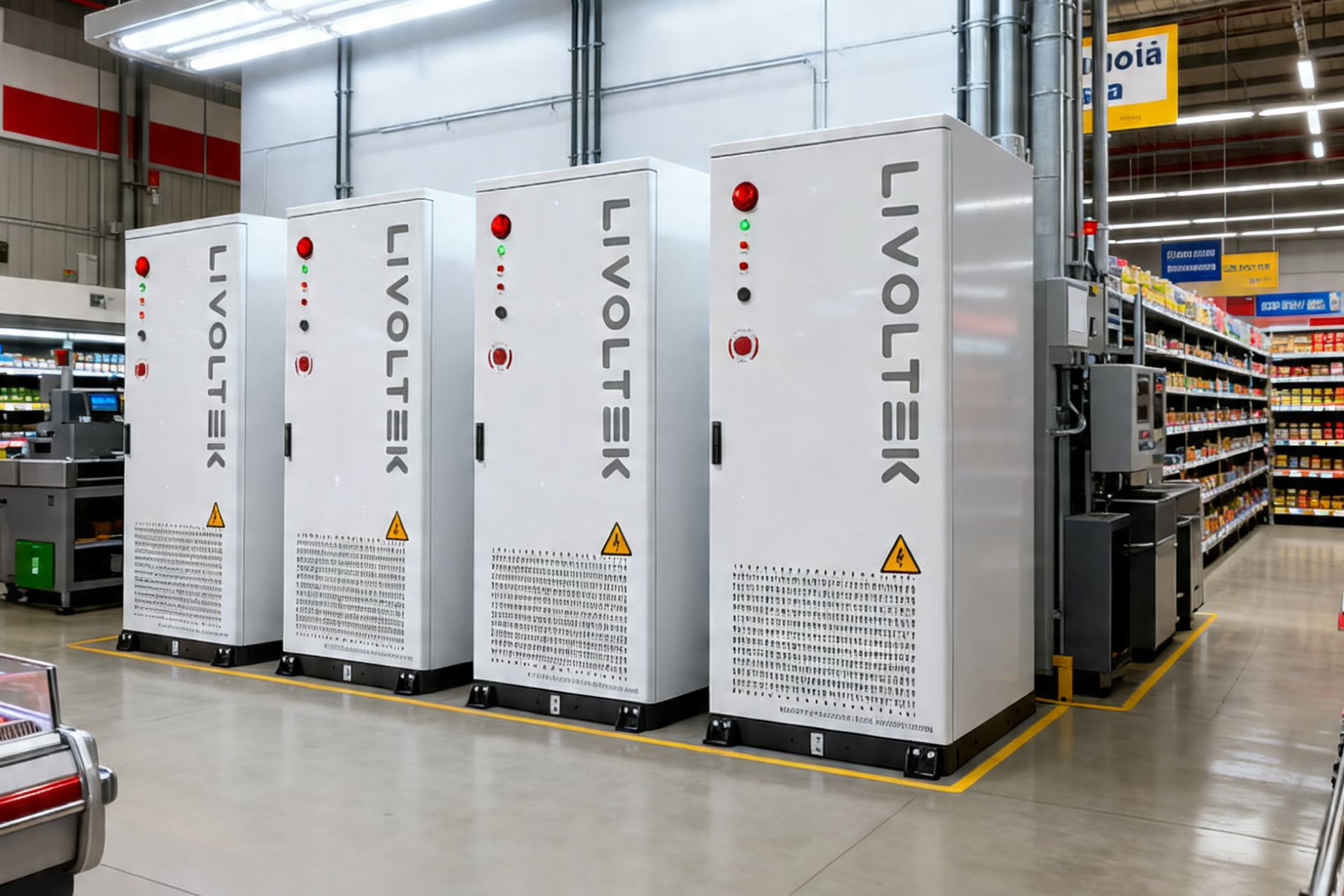
- For a supermarket with a 60 kW load (cold storage, lighting, AC, cash registers), you have about 4 hours—exactly the critical window during which perishable goods remain safe.
- For a small factory with a consumption of 100 kW (production lines, compressors), you have approximately 2.5 hours—enough to orderly complete the production cycles in progress.
It’s also worth noting that you can connect up to 10 BESS units in parallel for a total capacity of over 2.5 MWh. So, you start with one unit and add more as your business grows.
The 3 ways a BESS makes you money
This is the major difference between a residential battery and an industrial BESS. At the residential level, the battery reduces your bill. At the industrial level, the BESS becomes an asset that generates revenue.
1. Reducing Peak Consumption
Companies pay their energy bills in two separate components.The first is the actual energy consumed, measured in kWh, which indicates exactly how much electricity you used this month. The second is the maximum power drawn, measured in kW, which indicates the highest consumption peak you reached during a 15-minute interval over the course of the month. And it’s the second component that really hits your wallet.
How it works in practice: the utility continuously measures how much power you draw from the grid. Every 15 minutes, it records the average consumption for that interval. At the end of the month, it takes the highest peak from all the 15-minute intervals of the month, and the power component on your bill is calculated based on that value.
Let’s take an example: your business normally consumes a constant 50 kW. But every morning at 6:00 a.m., three compressors start up simultaneously, using a combined 160 kW for 4 minutes, after which consumption returns to 50 kW. Those 4 minutes of 160 kW, averaged over a 15-minute interval, generate a peak of approximately 90 kW (the average between 4 minutes at 72 kW and 11 minutes at 50 kW). So you pay the power component for 72 kW, not for the 50 kW you actually consume 99% of the time. The extra 32 kW difference is directly reflected in your monthly bill, month after month.
BESS solves exactly this problem. When it detects a consumption peak, it instantly discharges the stored energy, “covering” the difference and keeping the apparent consumption from the grid at a constant level. The utility sees a flat line of 50 kW instead of a peak of 72 kW. The result: the power component of the bill decreases significantly. For businesses with frequent peaks—such as bakeries when starting up their ovens, supermarkets when starting up their cold storage units, or factories when starting up production lines—the annual savings on this component alone can reach thousands or tens of thousands of euros.
2. Optimization of hourly rates (load shifting)
Romania is moving toward a general rule of time-of-use pricing (along with the transition to smart metering). Electricity will be cheaper at night and on weekends, and more expensive on weekdays between 6:00 a.m. and 10:00 p.m. The BESS stores energy at night, when rates are low, and releases it during the day, when prices rise. The difference between the purchase price and the usage price translates into direct savings.
Combined with a photovoltaic system, the effect is amplified: you store the solar surplus from midday to consume it during the evening peak, when the grid is most expensive. Basically, you no longer sell energy cheaply and buy it expensively; you keep everything you produce for the times when it’s worth the most.
3. Energy Trading and Virtual Power Plants (VPP)
This is where BESS not only reduces your costs but also generates active revenue for you.
A Virtual Power Plant is a simple concept: multiple BESS systems in different locations, connected via a software platform, operate as a single large power plant. When the national grid urgently needs energy (peak demand, imbalance between production and consumption), the VPP platform discharges energy from the participating BESS units back into the grid. The grid operator pays for this flexibility at prices considerably higher than the standard rate.
Essentially, your BESS becomes a source of passive income. It sits installed behind your facility, powers your business daily, and, at the same time, participates in the national energy system’s balancing market. European legislation already facilitates this model, and Romania is aligning with it. Companies that invest in BESS now will be ready to benefit from the moment the Romanian flexibility market becomes fully operational.
Safety: The 5 Levels of Protection
For an investment of tens of thousands of euros installed in your production facility, safety is no minor detail. And here, BESS Livoltek offers 5 levels of protection:
- Electrical protection against power surges, short circuits, and insulation faults, with rapid isolation in the event of a problem.
- Three-level thermal protection (FSS – Fire Suppression System): early detection of thermal anomalies and prevention of “thermal runaway” (chain reaction of cell overheating).
- IP55 physical protection for the cabinet (PACK at IP67, PCS at IP66) – fully dust- and water-tight.
- C3/C5 corrosion protection – resistance in harsh industrial environments.
- Cybersecurity protection – “financial-grade” end-to-end encryption for data transmitted to the cloud.
Additionally, the system includes AI monitoring with self-diagnostics and remote updates (OTA – Over The Air). The Livoltek team monitors the status of each module in real time and can intervene proactively before a minor issue escalates.
For whom is the 125 kW/261 kWh BESS suitable?
The short answer: for any business with an average consumption between 30 and 100 kW that:
- Pays significant penalties for contracted power or consumption peaks.
- Has critical equipment that cannot tolerate interruptions (cold storage rooms, servers, production lines).
- Operates in areas with an unstable grid or frequent outages.
- Already has or plans to install a photovoltaic system and wants to maximize self-consumption.
- Wants to prepare for the energy flexibility market (VPP).
Typical categories: industrial bakeries and pastry shops, medium-sized hotels and inns, supermarkets and grocery stores, small production facilities, mechanical workshops with heavy equipment, farms with greenhouses or processing facilities, logistics centers with cold storage.
The Next Step
Investing in a BESS isn’t a decision you make after reading an article. It’s a decision that requires an analysis of your consumption profile, a realistic estimate of the savings and payback period, and a discussion with engineers who understand the specifics of your business.
The Livoltek team and certified partners in the local network can perform this analysis for free, based on your recent bills and operating schedule. The result is a concrete calculation: how much money you save, how many years it takes to recoup your investment, and what additional revenue you can generate by participating in flexibility programs.
Industrial energy storage is no longer an experiment. It’s a business tool. The only question that remains is how long you’ll wait before putting it to work.