
How to Finance an Industrial Photovoltaic System with Storage in 2026: A Complete Guide to Available Programs in Romania
You’ve decided you want solar panels and storage for your business. You’ve run the numbers, understood the savings, and chosen your equipment. And now comes the question that holds everything up: “Where does the money come from?”
The good news is that in 2026, Romania has more active funding programs for photovoltaic systems with storage than ever before. The not-so-good news: there are so many that it’s easy to get lost, apply to the wrong program, or buy ineligible equipment.
This guide shows you exactly which program is right for you, depending on who you are, what you want to install, and how large your investment is.
If you are a farmer or processor: the AFIR solar energy program
The latest funding program, launched for public consultation in April 2026 by the Ministry of Agriculture and Rural Development through AFIR (the Agency for Rural Investment Financing).
What you receive: 100% non-reimbursable funding from the Modernization Fund, with a total budget of 200 million euros. The maximum limit per beneficiary is 20 million euros, and each beneficiary may submit multiple projects, but for different locations.
What is specifically funded: the construction of new electricity generation capacity from renewable sources (excluding solar), with or without energy storage systems. The €200 million allocation is divided equally between two components: projects with installed capacity up to 1 MW and projects with capacity over 1 MW.
Who is eligible: companies operating in agriculture, hunting, and related services (CAEN 01), the food industry (CAEN 10), and beverage manufacturing (CAEN 11). From sole proprietorships and micro-enterprises to large enterprises, cooperatives, and land improvement organizations. Essential condition: self-consumption of at least 70% of the energy produced by the new installations.
Important context: interest in this type of funding is enormous. In previous rounds, funding requests exceeded 500 million euros. Projects are selected through a competitive, points-based procedure, and implementation must be completed by the end of 2028.
Which Livoltek equipment is suitable: for farms and food processors, the product range is tailored to the scale of the project. Systems under 100 kW: GT3 grid-tied inverters (4–25 kW, three-phase) or HP3 hybrid inverters (5–30 kW, three-phase) with BHF High Voltage batteries (5–30 kWh) for storage. Installations over 100 kW: high-power GT3 inverters (75–125 kW) with C&I ESS BHF-G storage (15–60 kWh per rack). MW-scale installations: 125 kW/261 kWh BESS in a multi-unit configuration. All Livoltek products use LiFePO4 technology, which is eligible under the scheme’s requirements.
For industrial storage, the Modernization Fund
Here you enter a different category of funding: larger sums, more complex projects, and stiffer competition.
In March 2026, the European Commission approved a major investment scheme: 150 million euros in non-repayable grants from the Modernization Fund for the development of battery storage capacity through stand-alone installations of at least 2,174 MWh nationwide.
What this means in practice: support of up to €69,000 for each MWh of installed storage, with a maximum funding of €15 million per project, which can cover up to 100% of eligible costs. The call for projects will be launched in the second quarter of 2026, and implementation is scheduled to be completed by December 31, 2030.
Eligibility requirements: the project must involve the construction of a new, stand-alone battery storage facility connected to transmission or distribution networks. Minimum power of 1 MW, capacity-to-power ratio of at least 2:1. Lead-acid, NiCd, or NiMH batteries are not eligible, which means that the LiFePO4 technology used by Livoltek is fully eligible.
Eligible entities: businesses of all sizes (micro-enterprises, SMEs, large enterprises, including start-ups) and autonomous public utilities registered with the National Trade Register Office (ONRC).
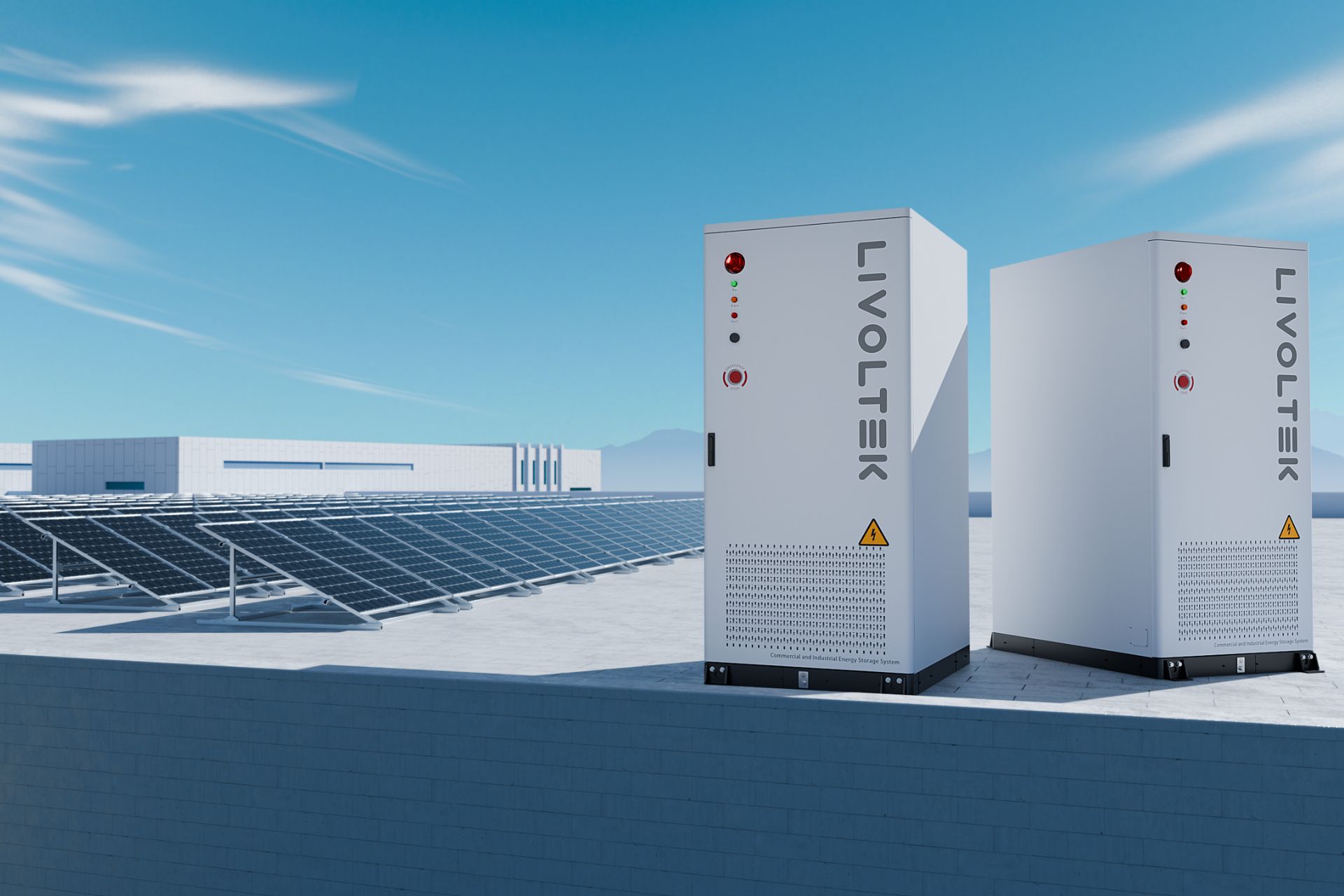
Which Livoltek equipment is suitable: for MW-scale projects, the Livoltek 125 kW/261 kWh BESS is the go-to product. Supports up to 10 units in parallel, scalable to over 2.5 MWh per cluster. LiFePO4 technology with 8,000+ cycles, liquid cooling, IEC62619 and IEC62933 certifications. A typical project with 4 Livoltek BESS units provides approximately 1 MWh of storage—exactly within the optimal range for the scheme’s requirements.
Important: this is a competitive scheme. Beneficiaries are selected through a competitive bidding process, and the quality of the technical and economic documentation can make the difference.
Romania’s budget for the 2024–2026 Modernization Fund is 815 million euros, distributed across several types of projects: investments in renewable energy production, investments in self-consumption, and, as a new feature in 2026, dedicated investments in storage capacity.
EV Charging Stations and Solar Power Generation: e-MOVE RO and e-Mobility RO
The Ministry of Transport and Infrastructure has launched two complementary funding programs, through the Modernization Fund, for electric vehicle charging infrastructure.
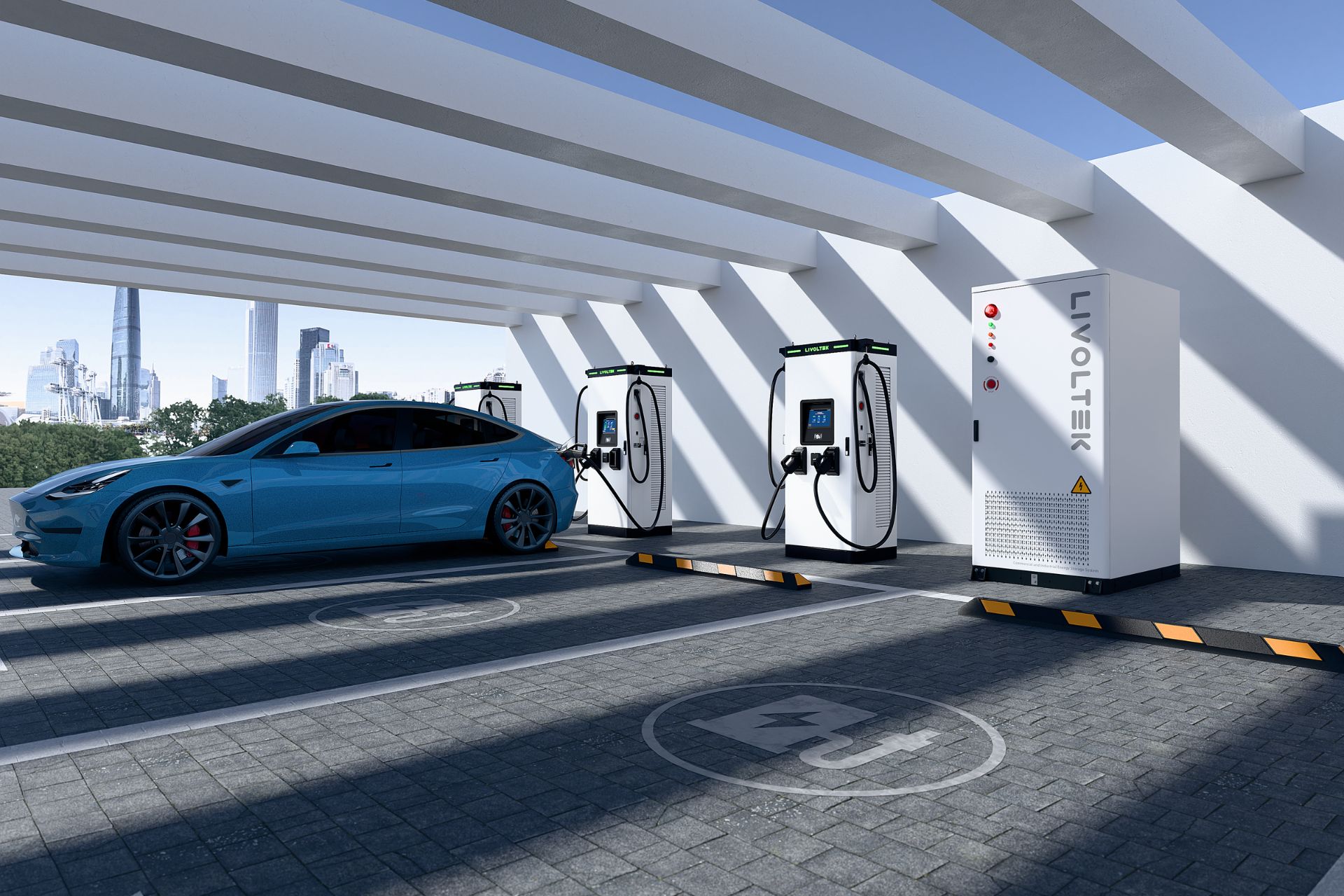
e-MOVE RO funds charging stations on public roads in Romania, but outside the network of highways and major national roads (TEN-T). It is aimed at micro-enterprises, SMEs, and large enterprises. The scheme has two sub-measures: Sub-measure 1 covers charging infrastructure (charging stations themselves), and Sub-measure 2 covers charging infrastructure combined with local renewable energy generation systems and storage solutions. Sub-measure 2 is the one relevant to Livoltek: it funds charging stations plus photovoltaic panels plus storage batteries, in an integrated package.
e-Mobility RO has a similar objective, but focuses on the network of highways, expressways, and major national roads managed by CNAIR along the TEN-T corridors.
Which Livoltek equipment is suitable (for Sub-measure 2 of e-MOVE RO): EV charging stations from the Livoltek range (RobotAC 7/11/22 kW or BUSH 2×22 kW, including high-power DC stations), combined with GT3 grid-tied inverters (4–125 kW) and BHF or BESS storage batteries, depending on the project’s scale. This is the only funding program that simultaneously covers three Livoltek product lines: EV charging stations, inverters, and batteries.
If you’re a real estate developer, BREEAM and LEED certifications
This section isn’t about direct financing, but about added value and competitive advantages. If you’re developing a real estate project—residential, office, or commercial—integrating a photovoltaic system with storage isn’t just an expense, but a value multiplier.
The international BREEAM (Building Research Establishment Environmental Assessment Method) and LEED (Leadership in Energy and Environmental Design) certifications place significant emphasis on a building’s energy independence. A PV system with integrated storage directly contributes to the assessment categories for energy, carbon emissions, and resilience, adding points that can make the difference between a “Very Good” certification and an “Excellent” or “Outstanding” one.
Concrete benefits: higher value per square meter when selling or leasing (tenants of large office spaces are increasingly demanding green certifications), access to preferential financing (banks offer better terms for certified buildings), permit advantages in some localities where authorities offer incentives for green buildings, and a competitive differentiator in a market increasingly sensitive to sustainability.
The Romanian market has matured significantly, and real estate developers are already incorporating solar systems into the design phase as an integral part of BREEAM and LEED certifications.
Which Livoltek equipment is suitable?
- For real estate development projects, solutions are scaled to the project’s scope.
- For residential buildings: single-phase (3–6 kW) or three-phase (5–30 kW) hybrid inverters with BHF High Voltage batteries.
- Office buildings: three-phase grid-tied inverters (30–125 kW) with C&I ESS BHF-G storage (15–60 kWh per rack).
- Large commercial complexes: 125 kW/261 kWh BESS with integrated EV stations.
Alternatives if no programs are available
Funding programs have limited application windows, deadlines, and budgets. Sometimes you apply too late, and sometimes you don’t qualify. That doesn’t mean you have to postpone your investment.
Leasing for energy equipment is an increasingly common option. You pay monthly installments from the savings on your bill. The net effect: the lease payment is partially or fully offset by the reduction in your bill, and there is no cash flow impact at the time of purchase.
Green bank loans are offered by several Romanian banks (BCR, BRD, Raiffeisen, CEC Bank) with preferential interest rates for investments in renewable energy. BCR, for example, actively promotes complementary financing for Electric UP.
Direct purchase with payback calculation: at the current energy price of 1.50 lei/kWh and a commercial consumption profile, a Livoltek PV system with storage pays for itself in 4–7 years (depending on size and consumption profile). With energy prices rising by 3–5% annually, the payback period decreases even further. And the 10-year warranty on Livoltek equipment means a minimum of 3–6 years of mathematically guaranteed net profit after payback.
The decisive argument for not delaying: every month without a system = unused solar surplus, energy purchased at full price, and unnecessary penalties paid on contracted power. The cost of waiting is therefore concrete and calculable.
Common Mistakes When Applying for Funding
If you want to avoid having your application rejected and missing out on opportunities, here’s what to avoid.
The first mistake, and the most common one: purchasing equipment before funding is approved. Most programs (including Electric UP) clearly state: only expenses incurred after signing the funding contract are eligible. If you bought and installed the panels “to save time,” the expense is no longer eligible. The investment remains yours, but without funding.
The second mistake: incomplete documentation or documentation submitted in the wrong format. Electric UP, for example, allows only one clarification per stage. If the application is incomplete, you have only one chance to complete it. If you miss the 10-calendar-day deadline for clarifications, the application is rejected. Tip: work with a specialized consultant or a Livoltek partner who is familiar with the documentation requirements.
The third mistake: ineligible or uncertified equipment. Not every battery and not every inverter is eligible. The programs have specific technical requirements: minimum storage capacity of 30% of PV power (Electric UP), excluded technologies (lead, NiCd, NiMH under the Modernization Fund), mandatory certifications. Choose certified equipment and verify eligibility before submission, not after.
The fourth mistake: confusing the programs. Electric UP is for SMEs and the hospitality sector, with a cap of 150,000 euros. The Modernization Fund (stand-alone battery scheme) is for larger operators, with a cap of 15 million euros, but a minimum power requirement of 1 MW. Casa Verde and RePowerEU are for residential prosumers, not for businesses. Applying to the wrong program means wasted time and a missed opportunity.
The fifth mistake: incorrect project sizing. For Electric UP, the storage capacity must be at least 30% of the energy produced by the PV system. If you install 100 kWp of panels, you need at least 30 kWh of storage. Undersizing the storage = project rejected. Excessive oversizing = ineligible expenses that you bear yourself.
How the Livoltek product range maps to each program
Here’s a quick summary to simplify your decision-making process:
- For the AFIR scheme – agriculture and food industry (CAEN 01/10/11): GT3 grid-tied inverters 4–125 kW or HP1/HP3 hybrid inverters 3–30 kW, BLF Low Voltage batteries 5.12 kWh (expandable) or BHF High Voltage batteries 5–30 kWh, BESS 125 kW/261 kWh for large projects. Storage is optional but recommended.
- For the Modernization Fund – stand-alone storage (minimum 1 MW): 125 kW/261 kWh BESS in a multi-unit configuration (10 units in parallel = 1.25 MW / 2.6 MWh). LiFePO4, 8,000+ cycles, liquid cooling, IEC certifications.
- For e-MOVE RO, Sub-measure 2 – EV stations with PV and storage: Livoltek EV stations (RobotAC, BUSH, DC stations), GT3 inverters, BHF or BESS batteries. The only program that simultaneously covers three product ranges.
- For real estate developers (BREEAM/LEED): scalable solutions ranging from single-phase hybrid inverters to industrial BESS.
Find the program that best fits your profile. Check the eligibility of the equipment you want. Do not purchase anything before signing the financing contract. Work with a Livoltek-certified consultant or partner who is familiar with the requirements of each program.
The Hexing Europe team in Timișoara and our network of over 22 distribution partners can provide both technical support (system sizing, equipment specifications, certifications) and administrative support (eligibility, documentation, compliance with the applicant’s guide).
Funding is available. The equipment is available. The only question is whether you submit your application in this cycle or wait for the next one—and in the meantime, pay the full price.