
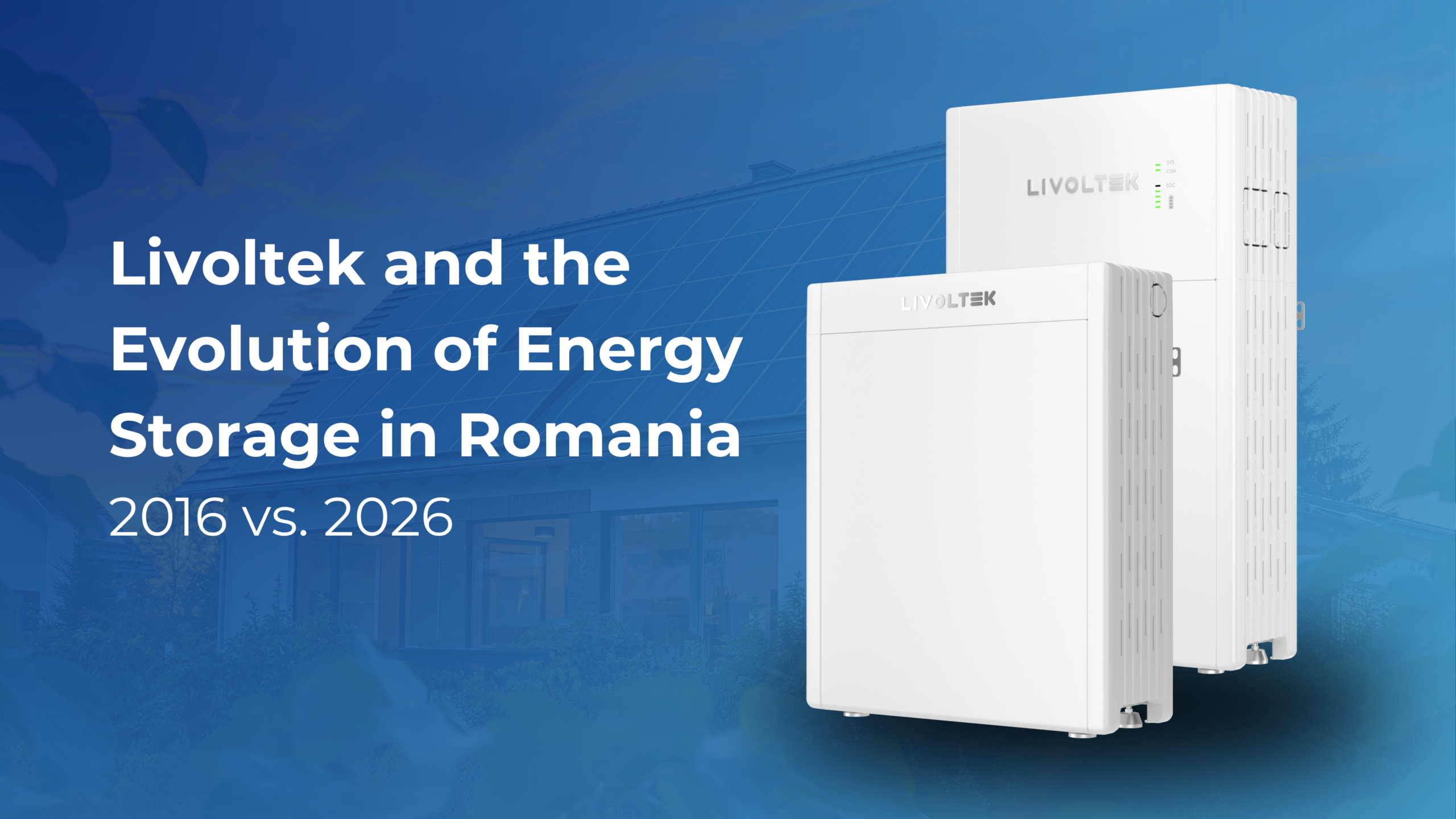
2016 vs. 2026: Livoltek and the Evolution of Energy Storage in Romania
The Romanian photovoltaic market has come a long way over the past 10 years. From the very first installations to the tens of thousands of operational systems today, the transformation has been radical. But the evolution didn’t stop at panels and inverters; energy storage has gradually become the missing piece of the energy independence puzzle.
Let’s see how we got here and what this evolution means for today’s prosumers.
2015–2017: When Storage Was a Luxury
Between 2015 and 2017, residential photovoltaic systems were gaining ground in Romania, but energy storage remained a rarity. The reasons were clear:
- Prohibitive costs. A 5 kWh battery cost 15,000–18,000 lei, and for 10 kWh, the price reached 28,000–32,000 lei. For most homeowners, investing in storage doubled or tripled the cost of the panels and inverter combined.
- Immature technology. The batteries available on the market used different chemistries (NMC lithium-ion, lead-acid), with varying performance and durability. Warranties were uncertain, lifecycles unclear, and capacity degradation—an unknown.
- Closed ecosystems. Major inverter manufacturers developed storage solutions compatible exclusively with their own equipment. If you had an inverter from Brand X, you were limited to batteries from the same brand. There was no interoperability.
- Lack of service infrastructure. Most brands had local representatives, but service meant sending the equipment back to the country of origin (most often China), with turnaround times of 6–12 weeks. Local inventory was minimal or nonexistent.
In this context, storage remained a solution for early adopters with generous budgets and a high tolerance for risk.
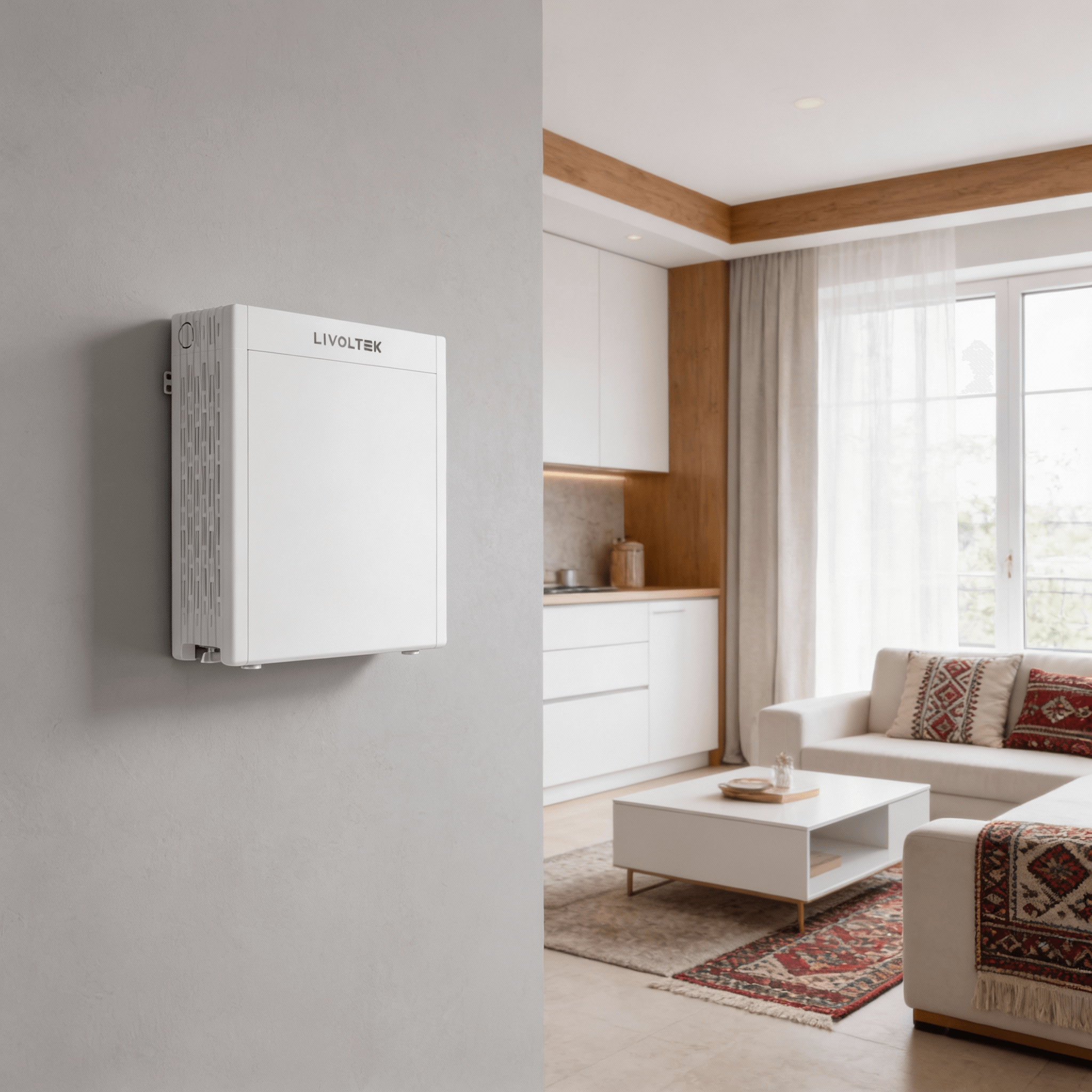
2018–2020. The Prosumer Boom and the First Challenges
As the Casa Verde Fotovoltaice prosumer program (2018–2019) gained popularity, the market saw significant growth. Tens of thousands of Romanians installed solar panels, quickly discovering the benefits of generating their own energy. But they also discovered the limitations: In short, it was a period when demand for storage was growing, but the barriers remained relatively difficult to overcome.
- The surplus problem. On sunny days, the systems produced much more than the home’s instantaneous consumption. The surplus was fed into the grid, and prosumers received an energy “credit” in return for use at night or on cloudy days. The system worked, but it was economically inefficient because prosumers were “selling” energy at a low price and “buying” it back at a high price.
- System Rigidity. Customers who wanted to add storage to their existing system found that their options were limited. If the installed inverter was not “hybrid” (battery-ready), the only solution was to replace it entirely, an additional investment of 3,000–5,000 euros.
- Long response times. When technical issues arose, the resolution process was slow. Local service was either unavailable or unprepared, and replacement parts arrived late from abroad. Customers were left without a functional system for weeks or months.
- Insufficient documentation. Much of the equipment came with manuals in English, and installers learned as they went along. The lack of dedicated training led to incorrect installations and suboptimal configurations.
2021–2023. Market Maturity and Shifting Priorities
Between 2021 and 2023, the Romanian energy storage market began to mature, with several factors contributing to this shift: The market is becoming more competitive, more informed, and more demanding.
- Falling battery costs. Mass production of LiFePO4 (lithium-iron-phosphate) cells has dramatically reduced prices. The technology is becoming safer, more durable, and more accessible. Batteries that cost 30,000 lei in 2018 will cost 18,000–20,000 lei in 2022.
- The 2022–2023 Energy Crisis. The explosive rise in electricity prices (from 0.30 lei/kWh to over 1 leu/kWh at peak times) has transformed storage from a “nice to have” into a “must have.” Prosumers realize that every kWh stored and consumed from the battery translates into real, tangible savings.
- The Emergence of AC-Coupled Solutions. AC-Coupled technology (batteries that connect directly to the electrical grid, independent of the photovoltaic inverter) is gaining ground. The advantage: you can add storage to any existing system, regardless of the inverter brand, and you are no longer forced to replace functional equipment.
- Pressure for local service. Customers are becoming more demanding. They no longer accept 8-week wait times to resolve an issue. They demand fast service, local inventory, and technicians who speak Romanian. Manufacturers unable to provide this level of support are beginning to lose ground.
- New selection criteria. While in 2015–2018 customers chose based on “big brand = guaranteed quality,” in 2022–2023 the criteria become more pragmatic: price per kWh, warranty backed by local infrastructure, flexibility, compatibility with existing systems, and fast service.
The market is becoming more competitive, more informed, and more discerning.
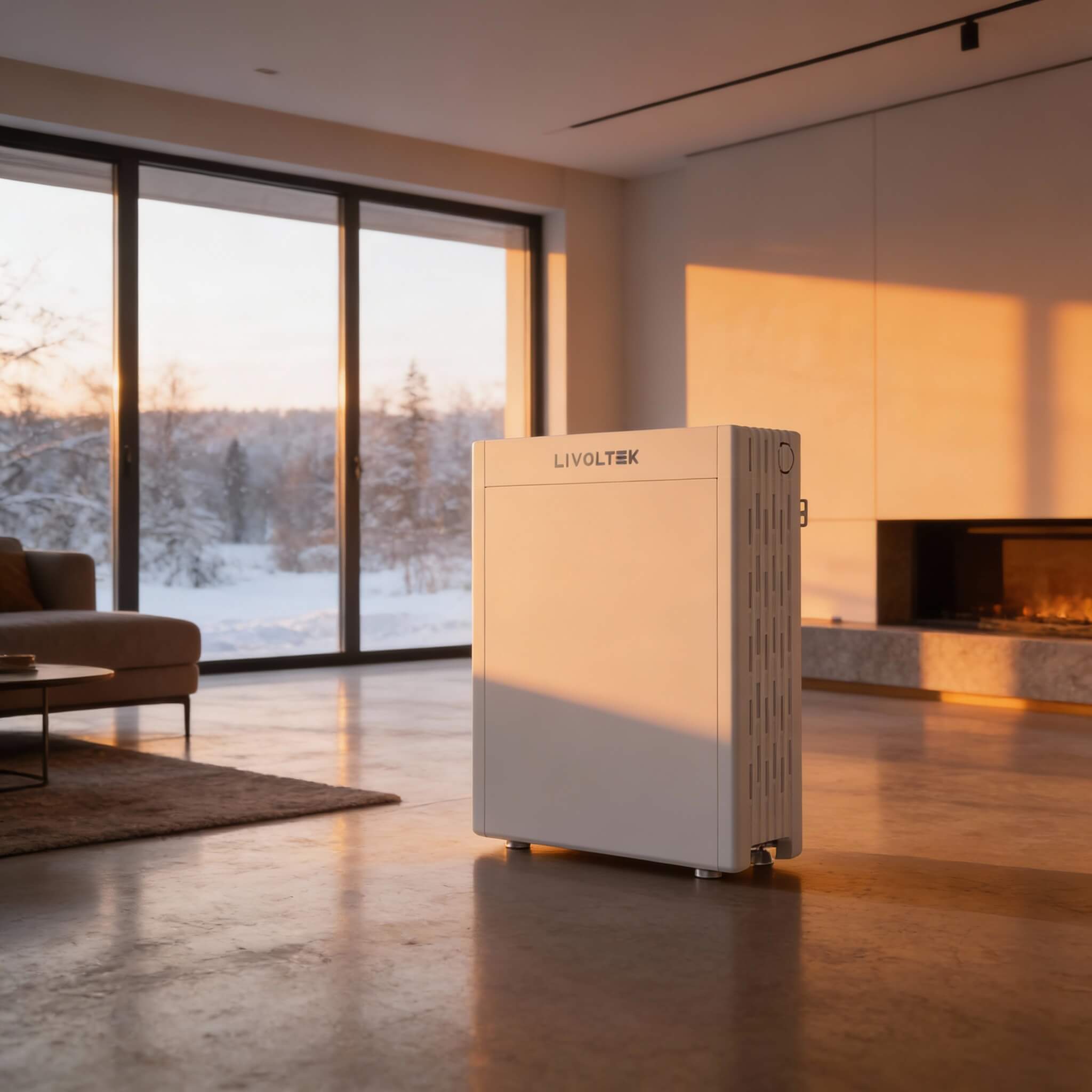
2024–2025. RePowerEU and the Democratization of Energy Storage
The RePowerEU program, launched in 2024 and continuing into 2025, is a game-changer. Vouchers of up to €5,000 for energy storage systems make this technology accessible to the general public.
Suddenly, storage is no longer a luxury, but becomes a concrete opportunity. But democratizing access also brings new challenges:
Explosion in demand. Tens of thousands of prosumers want to access the program simultaneously. Manufacturers and distributors without sufficient local inventory cannot deliver on time. Wait times of 2–3 months become common.
The need for education. Many customers are encountering energy storage for the first time. They do not understand the difference between AC-coupled and DC-coupled systems, between LiFePO4 and NMC batteries, or between a formal warranty and actual service. The need for information and guidance is growing exponentially.
Pressure on installers. Installers must install large volumes in a short time. The lack of adequate training leads to errors. The end customer suffers.
Clear market differentiation. In this context of high demand, the differences between manufacturers become apparent:
- Who actually has local inventory vs. who makes promises but doesn’t deliver?
- Who provides real training to installers vs. who leaves them to improvise?
- Who responds quickly to technical issues vs. who disappears after the sale?
- Who offers a warranty backed by infrastructure vs. who has only a promise on paper?
What prosumers are looking for in 2026. The market’s concrete needs
After 10 years of evolution, Romanian prosumers have learned what works and what doesn’t. Selection criteria have become more refined:
1. A realistic price for modern technology
They no longer look for the cheapest option, but rather the fair price for real value. They understand that a 10 kWh battery for 13,000 lei with LiFePO4 cells and a 10-year warranty is a fair deal, while much higher prices for the same capacity amount to unjustified profit.
2. Flexibility and compatibility
They want solutions that work with their existing system, not solutions that force them to start from scratch. Compatibility with any brand of inverter is becoming an essential criterion.
3. Demonstrable local service
They are no longer impressed by a “representative in Romania.” They want a physical address, a warehouse with actual stock, a local technical team, and concrete response times. “We’ll send it to the factory for analysis” is no longer acceptable in 2025.
4. Warranty backed by infrastructure
A 10-year warranty only matters if you know the manufacturer will still be here in 5–7 years. Local investments (factories, warehouses, teams) are the real guarantee, not a signed PDF.
5. Technical transparency
They want to know exactly what they’re buying: cell type, actual number of guaranteed cycles, conversion efficiency, operating temperatures. Vague specifications no longer cut it.
6. Real support for installers
Prosumers understand that the installer is the key link. If the manufacturer offers adequate training, live technical support, and clear documentation, the chances of a successful installation increase exponentially.
Solutions tailored to the current market
In this mature market context, with clear needs and high expectations, solutions are emerging that specifically address these requirements. Livoltek, for example, is entering the Romanian market with a proposal built on the lessons of the past 10 years:
- AC-Coupled Architecture. Compatibility with any existing inverter does not force the replacement of functional equipment but respects the customer’s previous investments.
- Transparent pricing. 13,000 lei for 10 kWh (1,300 lei/kWh) vs. 28,000 lei for the same 10 kWh with “compatible” solutions (2,900 lei/kWh). The 15,000 lei difference is difficult to justify technically when efficiency is nearly identical (94% vs. 96%).
- Real local infrastructure. Operational warehouse in Timișoara (part of Hexing’s smart metering production). Replacement within 3 business days in case of a confirmed malfunction. We don’t “send it for analysis,” but rather “replace it with a new product.”
- Proactive monitoring. 24/7 monitoring system in Timișoara that detects anomalies before the customer notices them. Alerts the installer when parameters look suspicious. Prevention, not just reaction.
- Training for installers. Certification program with clear procedures, including live technical support during installation via video call.
- Backed 10-year warranty. 80% capacity guaranteed after 6,000 cycles (equivalent to 16+ years of daily use). The warranty is backed by our physical presence in Romania, not by an intermediary distributor who might disappear.
- LiFePO4 Cells. Safer and more durable chemistry than NMC, more resistant to extreme temperatures (-20°C / +55°C). Guaranteed operation in the Romanian winter.
Of course, Livoltek is not the only solution tailored to the current market. But it is a clear example of a product designed for the specific needs of Romanian prosumers in 2025, not for the generic European market of 2015.
What market trends teach us
Looking back over the last 10 years, a few lessons are clear:
- Big brands do not guarantee optimal solutions for every market.
- Technological lock-in is a business strategy, not a technical benefit.
- A warranty without infrastructure is an empty promise.
- The right price beats an unjustified premium price.
- Flexibility beats forced integration.
In 2015, energy storage was an expensive experiment for enthusiasts. In 2025, it is an affordable necessity for the general public of prosumers.
Market evolution has been driven by falling technology costs, the 2022–2023 energy crisis, the RePowerEU Program, and the maturing of consumer expectations. Today’s prosumers know what they want: fair pricing, flexibility, fast local service, and a warranty backed by facts. They no longer accept unjustified compromises.
Manufacturers who meet these specific needs (whether Livoltek or others) will earn the market’s trust. Those who remain stuck in 2015 models will discover that the market has evolved. And evolution waits for no one. Not even established brands.