
The Prosumer’s Guide: Everything You Need to Know About Solar Energy Storage Before You Invest
You have solar panels on your roof. They’re producing plenty of energy. But in the evening, when you actually need power, the sun has set, and you end up buying electricity from the grid at full price. You sold your daytime surplus at half price. You feel like something isn’t quite right in this equation.
And you’re absolutely right. It isn’t.
The solution is called energy storage—a battery that stores your solar surplus for when you need it. But the battery market is full of technical terms, specifications that seem identical, and promises that sound too good to be true. This guide explains everything you need to know, in simple terms, so you can make an informed decision.
What, exactly, is an energy storage system?
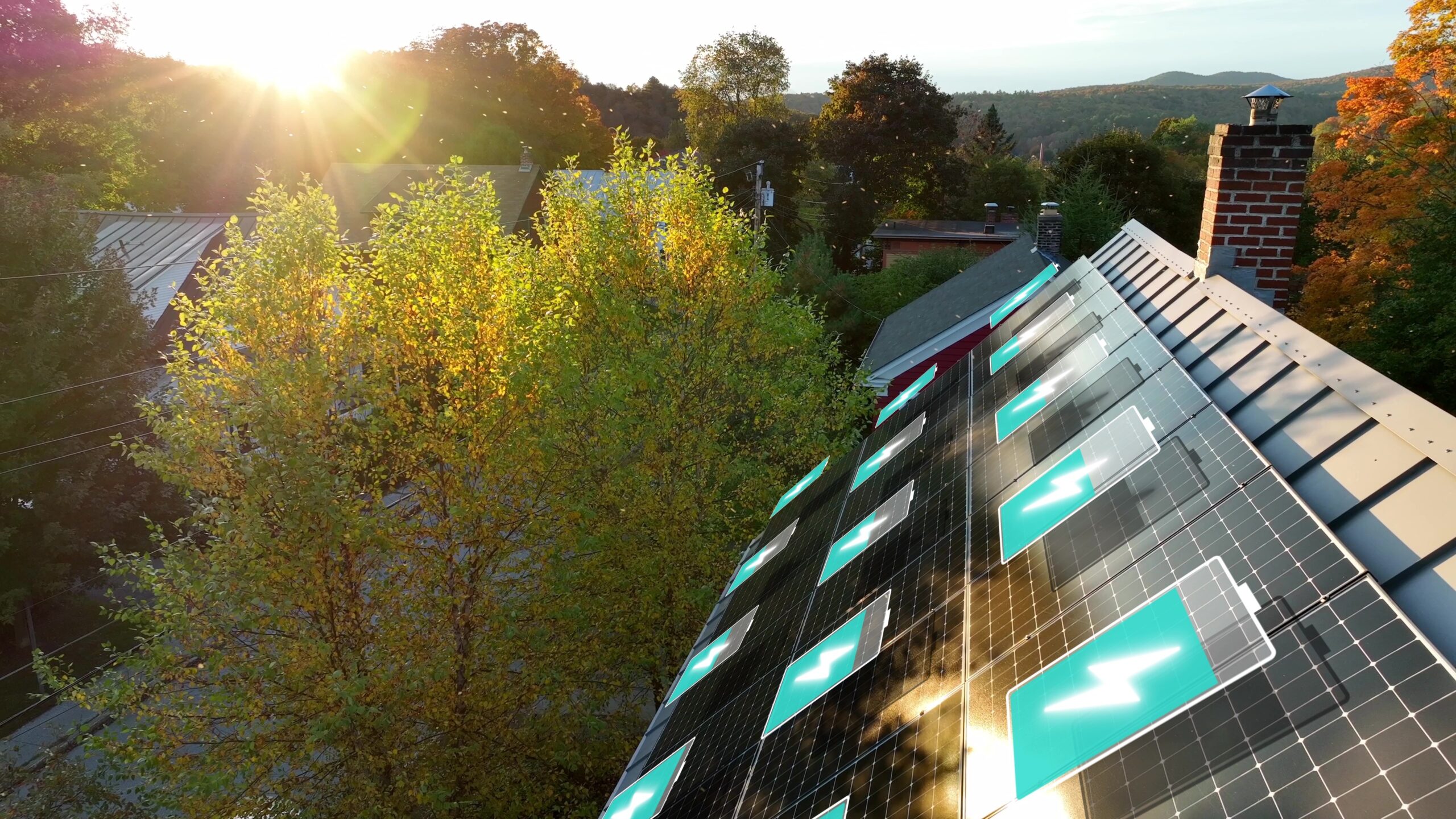
A home energy storage system (often called an ESS—Energy Storage System) is, at its core, a large battery connected to your electrical system. Its role is simple: it stores the excess energy your solar panels produce during the day and releases it in the evening or at night, when you need it.
Without a battery, your solar surplus feeds into the grid. The utility compensates you at a rate lower than the one at which you buy energy back in the evening. With a battery, the surplus stays with you. The price difference—between what you receive for exporting and what you pay for importing—is your actual savings.
But a storage system isn’t just a battery. It’s a set of components that must work together: the battery itself (the cells that store energy), the inverter (which converts current between the necessary forms), the battery management system (BMS)—the “brain” that protects the cells and optimizes charging— the smart meter (which measures energy flows), and the monitoring platform (the app that lets you see what’s happening).
First Step: DC-Coupled, AC-Coupled, or Hybrid?
This is the first decision—and, in many cases, the most important one. The coupling type determines how the battery connects to the rest of your system.
DC-coupled systems connect the battery directly to the panels, before the inverter. Solar energy goes directly into the battery without any intermediate conversion. Advantage: slightly higher efficiency (one conversion step is avoided). Disadvantage: requires a compatible hybrid inverter. If you already have a grid-tied inverter, you’ll need to replace it. This means additional costs and dependence on a single brand.
AC-coupled systems connect the battery to your home’s internal electrical system on the AC side. The battery has its own built-in inverter and operates independently of your existing photovoltaic inverter. The major advantage: compatibility with any already installed inverter. So you don’t have to discard functional equipment. The disadvantage: efficiency is 1–2% lower due to an additional conversion step—which, in practice, amounts to a difference of 30–60 lei per year for a 10 kWh system.
Hybrid systems combine a hybrid inverter with integrated batteries into a single ecosystem. Everything comes from a single manufacturer; everything is “integrated.” The advantage: simplicity for new installations, a single point of contact. The disadvantage: you’re locked into that manufacturer’s ecosystem (lock-in). If, in 5 years, you want a different battery or inverter, your options are limited.
Which one is right for you? If you already have a working photovoltaic system and want to add storage without changing anything you have, the AC-Coupled solution makes the most sense. If you’re starting from scratch (new installation), a hybrid system can be a good option. And if you want maximum long-term flexibility and the freedom to replace components individually, AC-Coupled remains the choice with the fewest compromises.
Capacity: How many kWh do you need?
Battery capacity is measured in kWh (kilowatt-hours) and indicates how much energy it can store. But not all kWh are “equal.”
The rated capacity is the number on the label. The usable capacity is how much you can actually use. The difference comes down to the DOD (Depth of Discharge). A 10 kWh battery with an 80% DOD actually gives you 8 kWh of usable capacity. A battery with a 90% DOD from the same 10 kWh gives you 9 kWh. LiFePO4 (lithium iron phosphate) cells, used by reputable manufacturers, typically allow for a DOD of 80–90% with minimal long-term degradation.
How do you figure out what you need? Simple: look at your evening and nighttime consumption. If you use 8–10 kWh between 6:00 PM and 8:00 AM, a 10 kWh battery will cover practically everything. If you use less (4–5 kWh), maybe a 5 kWh battery is enough.
A common mistake is oversizing: you buy a 15 kWh battery when you consume 6 kWh in the evening. The battery never fully discharges, so you’ve paid for capacity you don’t use. Another mistake is undersizing: you buy a 5 kWh battery but consume 10 kWh in the evening, so the battery runs out by 10:00 PM and you end up buying power from the grid for the rest of the night.
Practical tip: Analyze your bill and consumption by hourly intervals (if you have a smart meter from your utility provider) or make an estimate: an average Romanian family consumes between 8 and 12 kWh per day in total, of which is used in the evening and at night.

The 5 Technical Metrics to Compare
When comparing batteries from different manufacturers, the numbers in the specifications may seem similar. But the differences matter. Here’s what to look for:
- The first metric: round-trip efficiency. This indicates what percentage of the stored energy you recover during discharge. A battery with 94% efficiency loses 6% of its energy during the charge-discharge cycle. High-quality products fall within the 90–96% range. A 2% difference between two batteries translates to 30–60 lei per year—significant on paper, but negligible compared to the price difference between manufacturers.
- The second indicator: cycle life. How many complete charge-discharge cycles can the battery withstand before its capacity drops to 80%? LiFePO4 cells typically offer 6,000 cycles or more. With daily use, that translates to over 16 years of operation. NMC (nickel-manganese-cobalt) cells generally offer fewer cycles (3,000–4,000) and carry a slightly higher thermal risk.
- The third indicator: rated discharge power (kW). This indicates how many appliances can run simultaneously off the battery. A battery with a 3 kW discharge power can simultaneously power a refrigerator, lighting, and a TV, but not a washing machine (which consumes 2 kW on its own). A 5-kW battery comfortably covers the average power consumption of a home, including large appliances. Check whether the specifications mention continuous power (which it can sustain non-stop) versus peak power (which it can sustain for a few seconds).
- The fourth factor: operating temperature range. Your battery will operate in the winter at sub-zero temperatures and in the summer at temperatures above 35 degrees. LiFePO4 cells typically operate between -20°C and +55°C. NMC cells have a narrower range. If the battery is installed in an unheated garage or on an exterior wall, this factor matters.
- The fifth factor: scalability. Can you add capacity later? Some systems are modular, so you can add a second battery module as your needs grow. Others are fixed, so you’re stuck with what you have, and if you want more, you’ll need to buy a second complete system. Modularity is especially important if you’re investing a smaller budget now and plan to expand in 2–3 years.
On-grid vs. off-grid
An on-grid system remains connected to the power grid. When the battery is empty or consumption exceeds capacity, power comes from the grid. When the panels produce more than you can consume and store, the surplus feeds into the grid. It’s the most common type, the easiest to install, and the one that makes economic sense for 95% of Romanian prosumers.
An off-grid system operates completely independently. You have no connection to the utility grid. All energy comes from the solar panels and the battery. You need a large storage capacity, a backup generator, and a properly sized system. It’s suitable for isolated cabins, farms, or homes without access to the grid. It’s not suitable for your home in the city.
A hybrid system with an EPS (Emergency Power Supply) function is, in essence, an on-grid system that can temporarily operate as an off-grid system in the event of a power outage. When the grid goes down, the battery takes over powering the home in 0.2 milliseconds, with no noticeable interruption. When the grid comes back online, the system automatically reconnects. This is the scenario most prosumers are looking for: connected to the grid for the economic benefits, with a backup for peace of mind.
What the Livoltek Lineup Offers: An Overview
Livoltek, the energy brand of the Hexing Group, offers a complete range of storage solutions that cover all the scenarios described above.
AC-Coupled LIVOLTEK is the solution for the large number of prosumers in Romania who already have a functional photovoltaic system and want to add storage without changing anything they currently have. It connects to the AC side, works with any existing inverter, and requires no modifications to the electrical panel or the photovoltaic system. Basically, you add a battery next to the electrical panel, connect it, configure it, and you’re done. Starting price: 13,000 lei for 10 kWh.
The All-in-One ESS combines the hybrid inverter and low-voltage batteries into a single compact system. It’s ideal for new installations where you’re starting from scratch. Compact design, plug-and-play, and free online monitoring via MyLivoltek. Available in single-phase, 3–6 kW.
LIVOLTEK hybrid inverters (single-phase 3–6 kW and three-phase 5–30 kW) are the core of hybrid solutions. Integrated EPS backup function, export control, time-based operating modes, and a scalable modular design. They can be paired with multiple battery types from the lineup.
The HomeCellar 16 kWh battery is the newest product in the range, designed for families with high power needs. It offers high capacity, reliable backup, and reduced dependence on the grid.
The wall-mounted Low Voltage BLF batteries (5.12 kWh per module) feature high energy density and are expandable by adding additional modules. They can be installed indoors or outdoors.
The High Voltage BHF batteries (5–30 kWh) feature a modular design, IP65 protection rating (for indoor and outdoor installation), and high efficiency. The system supports expansion up to 30 kWh.
For commercial and industrial applications, the C&I ESS BHF-G series offers 15–60 kWh per rack, and the 125 kW/261 kWh liquid-cooled BESS system serves industrial parks and commercial complexes.
All Livoltek products use LiFePO4 (lithium iron phosphate) cells, considered the safest and most durable on the market, with over 6,000 life cycles. Eighty percent of the components are manufactured by international suppliers in Germany, Japan, and the U.S.
Beyond the Specifications: What to Look for in the Manufacturer, Not Just the Product
One aspect that storage guides often overlook is the quality of the manufacturer, not just the product. And yet, in an investment with a 10-year warranty, the manufacturer may matter more than the specifications.
A warranty is just a promise if there’s no one to honor it. Check: Does the manufacturer have a physical presence in Romania? A warehouse with inventory? A support team that speaks Romanian? A clear replacement procedure? A 10-year warranty from a company with a virtual office and a warehouse in another country isn’t worth as much as one from a company with a factory in Romania.
Monitoring matters more than you think. An unmonitored battery can operate suboptimally for months without you even knowing it. A cloud-based monitoring platform, with a team that proactively monitors the system, detects problems before you see them reflected on your bill.
Local service isn’t optional. If the battery has a problem, it matters whether the replacement part arrives from Timișoara in 3 days or from China in 8 weeks. It matters whether you call someone who speaks Romanian or send an email to a generic support address.
A network of certified installers is a real differentiator. A manufacturer that invests in installer training has fewer post-installation problems, happier customers, and lower service costs. Check to see if the manufacturer has a certification program and a public list of partner installers.
The Real Cost: More Than Just the Purchase Price
When comparing offers, don’t just look at the price of the battery. Consider the total cost of ownership over 10 years.
The purchase price is obvious: the battery plus installation. But add in the hidden costs—or, more precisely, check to see if there are any. With some manufacturers: a monthly subscription for the monitoring app, an annual maintenance fee, service costs if a problem arises, and paid software upgrades.
Then calculate the actual annual savings, not the ones listed in the brochure. With average consumption and an energy price of 1.50 lei/kWh, a 10 kWh battery generates annual savings of somewhere between 1,875 and 2,400 lei, depending on your usage profile.
And here’s a factor that few people factor in: what happens to the price of energy. With a realistic annual increase of 3–5%, the annual savings also grow. A battery purchased today at today’s price will generate increasingly larger savings as energy prices rise.
Practical conclusion: how to choose
Choose the capacity based on your evening consumption, not on solar production. Choose the connection type based on what you already have installed. Choose LiFePO4 cells for maximum safety and durability. Choose a manufacturer with a physical presence in Romania, offering local service and proactive monitoring. And choose a manufacturer-certified installer, not “just some electrician who knows a thing or two.”
Energy storage isn’t a gadget, and it isn’t a luxury. It’s the component that transforms a photovoltaic system from a surplus producer into a generator of energy independence. With the right battery—chosen correctly, installed correctly, and monitored correctly—your investment pays for itself, your bill goes down, and your home keeps running no matter what happens to the grid.
And if you want to explore Livoltek’s options for your specific situation, you can find the full range at hexing.ro/ro/produse-hexing and a certified installer in your area at https://hexing.ro/distribution-network/.